MULTI-PAGE WEBSITE
We develop multi-page websites on Tilda for companies with several services, business areas or substantial content. We plan structure and navigation, design the home and internal pages in Figma, adapt the site for mobile devices and connect the agreed forms, CRM and analytics. We work remotely with clients in Russia and internationally.
WHEN A MULTI-PAGE WEBSITE MAKES SENSE
This format organises information around visitors’ needs. People can open the relevant service, learn about the company, explore projects or find contacts. Each standalone page has its own address and content, while shared navigation connects the sections.
Several services or business areas
Distinct offerings can benefit from separate pages. Each can explain the scope, examples, terms and customer questions in detail. The home page introduces the company and helps visitors choose the direction relevant to them.
Different visitor needs
Some people want to understand a service; others want to see completed projects, meet the team or find contact information. A clear structure helps each person follow their own route without reading every piece of content in sequence.
Substantial content
Detailed service descriptions, projects and company information do not always fit a compact introduction. A multi-page format gives these materials their own places. We consider both the sections needed now and how the website might develop later.
A compact business website may be sufficient to introduce a company, professional and contact details. A multi-page website is useful when offerings and materials need their own pages. A landing page usually focuses on one specific offer. We choose the format around the content and purpose rather than adding more screens for their own sake.
Compare with a compact business websiteWHAT DEVELOPMENT INCLUDES
We plan the site as connected pages with a shared style, clear routes and accessible contact options. The page count and content are agreed around the brief before work starts. The current development service covers the following stages and deliverables.
Structure and separate pages
We analyse the business, audience and competitors, then create a site map. We identify the home page, service pages, projects and other required sections. Prototypes help us review information order and navigation before developing the visual design.
Home and internal page design
We create a custom design concept in Figma. The home page introduces the company and its services; internal pages explore specific topics. Shared elements, typography and visual accents help the sections feel like parts of one website.
Navigation and mobile adaptation
We plan menus, internal links, buttons and routes to contact. We adapt pages for phones and other screens, checking readability, block order and access to important actions. Navigation should help visitors find what they need.
Tilda implementation and animation
We implement the approved layouts on Tilda, connect the pages and configure the planned elements. Animation supports the composition and emphasis. Its character and complexity are discussed alongside the design and included in the agreed scope.
Forms, CRM and analytics
We connect the agreed enquiry forms, CRM and analytics services. We establish what data is collected, where enquiries go and what access is needed. Specific systems, integration options and required subscriptions are clarified before implementation.
SEO, domain and management guide
We configure basic page SEO settings, titles, descriptions and descriptive addresses. Internal links connect the content, and we connect your domain. A management guide explains how to update the website’s content after handover.
HOME PAGE VISUAL DIRECTIONS
Two demonstration hero layouts show possible directions for the home page. In a multi-page project, that visual language extends to the internal pages. These are visual examples, not complete page sets or claimed client case studies.
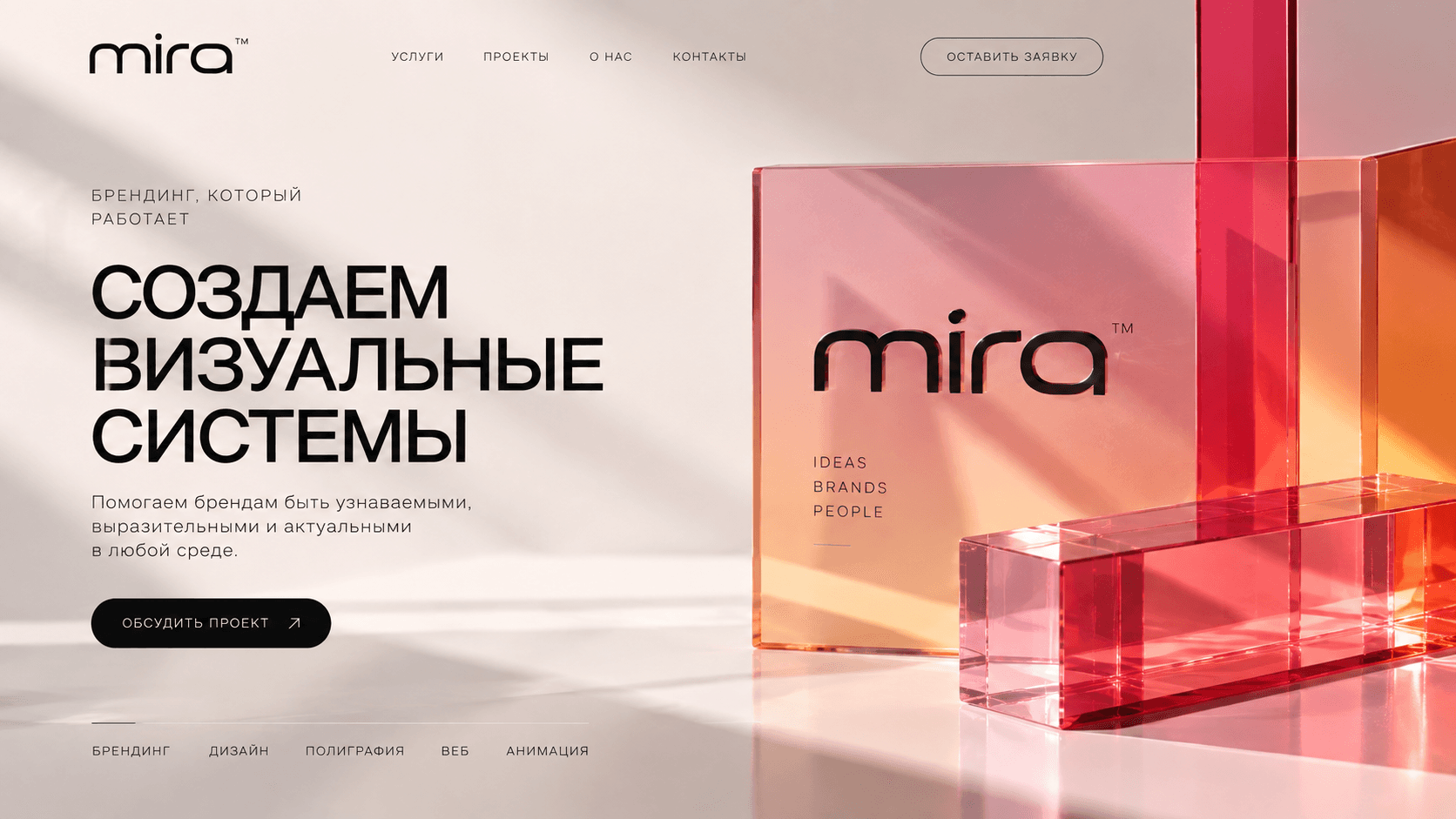
A typography-led home page
Demonstration layout · company introduction and visual emphasis
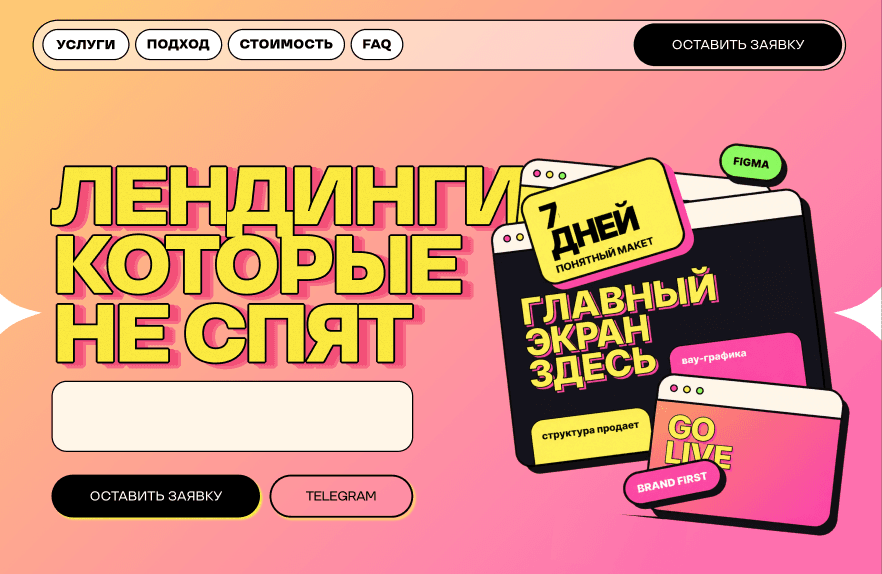
An expressive graphic home page
Demonstration layout · colour, graphics and a prominent offer
HOW WE BUILD THE WEBSITE
We begin with structure and content before moving to design and implementation. Agreeing the page list in advance helps establish the actual scope, price and timeline for a multi-page project.
Brief and project scope
We discuss the company, audience, business areas and intended visitor actions. We clarify the page list, functions, materials and integrations, then agree the scope, price and timeline before starting.
Site map and prototypes
We organise connections between sections and information on the main pages. We plan how people find the relevant service or project and reach a contact option, then agree the structure and prototypes.
Design concept
We develop the home and internal page layouts in Figma. We review shared elements, content hierarchy and how the design represents your brand. Adjustments are discussed within the agreed brief.
Build and integrations
We implement pages on Tilda, adapt them for mobile devices and connect them through navigation. We set up forms, agreed CRM and analytics integrations, animation and basic SEO settings.
Check and hand over
We check the pages, links, imagery and planned contact options, connect the domain and agree the launch. The result comes with a management guide. Required access and material readiness are discussed in advance.
PRICING AND TIMING
from ₽15,000 to ₽30,000
Timeline — 7–10 business days
Our current price for multi-page website development is ₽15,000–30,000, with an indicative timeline of 7–10 business days. We agree the final price and dates after reviewing the structure, materials and required functionality.
Page count and complexity, content volume, design, animation and integrations affect the cost. We agree the required pages and functionality before starting; new tasks are assessed separately from the approved scope.
Timing depends on text and image readiness, access to the platform and services, and approval stages. Domain registration or renewal, the Tilda subscription and third-party paid services are separate expenses discussed before launch.
Payment is split into 50% before work begins and 50% after project approval, before the final materials are handed over. At your request, we can sign a contract setting out the scope, price and timeline. Discussions and approvals take place remotely.
MULTI-PAGE WEBSITE QUESTIONS
Which pages are included?

They may include a home page, company information, separate services, projects and contacts. We agree the list and number around your business needs before development. The format itself does not imply a fixed or unlimited number of pages.
How does it differ from a landing or compact business website?
A landing page usually explains one specific offer, while a compact business website introduces a company or professional. A multi-page website gives standalone topics their own pages and addresses with shared navigation. This suits several business areas and substantial content.
How much does a multi-page website cost?
The current indicative price is ₽15,000–30,000, with a timeline of 7–10 business days. An estimate requires an agreed page list, content, design and integrations. Additional scope or complex functionality is discussed and priced separately.
Can you connect a CRM and analytics?
Yes, the service includes connecting forms, CRM and analytics services. Before starting, we agree the specific systems, access and enquiry delivery method. Integration options and third-party subscription costs depend on the selected services.
What materials should we prepare?
Company and service descriptions, text for the planned pages, photographs, project examples, contacts and existing brand materials. A preliminary section list is also helpful. If content is missing, we agree how it will be prepared and who is responsible before starting.
Are the domain and Tilda subscription included?
Development includes connecting the domain, not paying for registration or renewal. The Tilda subscription and third-party paid services are separate expenses. We clarify hosting arrangements and access before launch so the site runs on the agreed platform.
How is SEO set up for individual pages?
We plan a logical structure, page names and addresses, titles and descriptions that reflect each page’s content. A service page can explore its own topic and link to related sections. Basic setup is part of development; ongoing promotion is scoped separately.
Can we update and expand the website ourselves?
After handover, we provide a guide to managing the Tilda website. Routine text, image and contact updates differ from developing new pages and functions. If you anticipate expansion or multiple languages, tell us in advance so we can agree the structure and scope.
LET’S DISCUSS YOUR WEBSITE
Tell us about your company, business areas and the pages you would like. We can discuss the structure, design, required integrations and a suitable launch date.